CONFERENCE TOPICS

The conference will address the latest scientific and technological advances in sheet metal forming, covering topics such as tribology and surface engineering, sustainability and circular manufacturing, material testing and standardization, formability and damage prediction, numerical simulation and digital process design, cold, warm, and hot forming technologies, joining and welding, and fatigue and fracture performance of formed components.

The conference will also highlight emerging manufacturing concepts, including incremental sheet forming  and hybrid manufacturing approaches integrating additive manufacturing with sheet metal forming, alongside the growing role of Artificial Intelligence, machine learning, and digital twins for process optimization, quality prediction, and intelligent manufacturing systems. Together, these topics reflect the ongoing transformation of sheet metal forming towards more sustainable, efficient, and high-performance manufacturing solutions.

We look forward to welcoming the sheet metal forming community to Barcelona for a week of scientific exchange, networking, and discussion on the technologies that will shape the future of manufacturing.
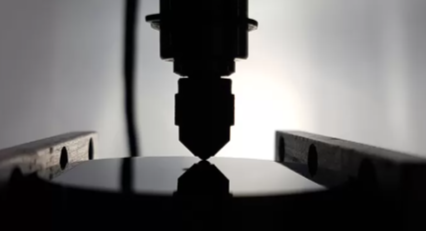
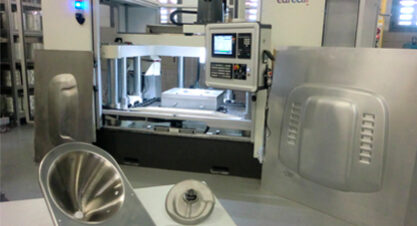
  • Tribology
  • Sustainability in sheet metal forming
  • Material testing and standardization
  • Part performance
  • Simulation and damage prediction
  • Forming processes: cold, warm and hot
  • Incremental forming
  • Hybrid manufacturing
  • Formability
  • Joining and welding
  • AI for forming
ISF

MINI-SYMPOSIUMS

  1. Hydrogen Effects on Sheet Formability. Chaired by Silvia Molas (Eurecat)
    This mini-symposium focuses on the influence of hydrogen on the formability and fracture behaviour of advanced high-strength steels. Contributions addressing hydrogen–microstructure interactions, hydrogen embrittlement, damage and fracture mechanisms, delayed fracture, and their impact on sheet metal forming are particularly welcome. The session will cover advanced experimental characterization, modelling and simulation approaches, as well as strategies to predict and mitigate hydrogen-assisted cracking during and after forming. Special attention will be given to third-generation AHSS and Q&P steels, supporting their safe implementation in lightweight and high-performance automotive components.
  2. Electrical steels for sustainable mobility and energy applications: processing, manufacturing and magnetic performance. Chaired by Junhe Lian (RWTH Aachen)
    Electric motor systems consume more than half of the world’s electricity, and every electric vehicle, generator and transformer relies on the soft magnetic performance of its electrical steel core. This performance is set along the entire process chain, from casting and rolling to cutting, embossing and stacking, where plastic strain and residual stresses introduced by forming increase core losses. This mini-symposium brings together the forming, materials and electrical engineering communities to discuss the processing and manufacturing of electrical steels and their effect on magnetic properties. Topics include high-silicon and thin-gauge grades, strip casting and rolling, texture and microstructure evolution, shear cutting, punching and embossing, residual stresses and magneto-mechanical modeling, recycled scrap and tramp elements, and data-driven process design.
  3. Hot stamping. Chaired by Marion Merklein (Friedrich-Alexander University of Erlangen-Nuremberg) and Jaume Pujante (Eurecat)
  4. Fracture toughness of sheet metal and thin-walled structures: Recent advances and applications. Chaired by Thomas Pardoen (UCLouvain) and David Frómeta (Eurecat)
    This mini-symposium focuses on the application of fracture mechanics to assess the fracture resistance of sheet metals and thin-walled metallic structures. Contributions addressing both experimental and numerical methods for fracture toughness evaluation of thin ductile metal parts are particularly welcome.
    The session will cover the main challenges, recent advances and research trends in the field, including experimental characterization and numerical simulation of crack initiation and propagation, advanced experimental methods for fracture toughness evaluation, fracture and damage modelling of thin metallic components, and implications for sheet metal forming and structural integrity of safety-critical components.
    Practical applications and industrial case studies demonstrating the potential of fracture toughness evaluation to support material qualification and product design are strongly encouraged.
  5. Advanced Microstructural Characterization for sheet material development. Chaired by Alejandro Sánchez (ALBA Synchrotron) and Mohammad Hoseini-Athar (KTH).
    The microstructure and morphology of modern, high-performance sheet metals are crucial to the forming process, heavily dictating the quality and resilience of the end product. This mini-symposium provides an overview of advanced microstructural characterization techniques and their application throughout the different stages of the forming process. Contributions focusing on synchrotron radiation, advanced diffraction and imaging techniques, electron microscopy, in-situ testing, and multiscale characterization are particularly welcome. The session will explore the relationships between microstructure, deformation mechanisms, damage evolution, and formability in advanced steels, aluminum alloys, and other sheet materials. Special attention will be given to in-situ and operando approaches capable of tracking microstructural evolution during deformation, as well as their integration with modelling to support the development and optimization of advanced sheet materials.
  6. From High-Speed Forming to Crash: High Strain Rate Behaviour of Sheet Metals. Chaired by Cliff Butcher (Univ of Waterloo) and Jörgen Kajberg (LTU)
    This mini-symposium focuses on the characterization, modelling and application of sheet metals under high strain-rate conditions. Contributions addressing dynamic material characterization, strain-rate dependent constitutive behaviour, formability and fracture are particularly welcome. The session will explore how high strain rates influence deformation and failure mechanisms, and how these effects can be implemented in numerical simulations. Applications will cover both high-speed forming technologies, including impulse, electromagnetic and electrohydraulic forming, and impact and crashworthiness. Special attention will be given to advanced high-strength steels, aluminium alloys and other lightweight sheet materials for automotive and transport applications.
  7. Forming Circular Alloys: From Scrap Quality to Component Performance. Chaired by Dierk Raabe (Max Planck Institute) and Carlos Capdevila (CSIC)
    The increasing use of recycled content in steel and aluminium sheet production brings new challenges and opportunities for sheet metal forming. This mini-symposium explores how scrap quality, residual and tramp elements, alloy composition and material variability influence microstructure, mechanical behaviour, formability, fracture and component performance.
    Contributions combining advanced material characterisation, mechanical testing and modelling are particularly welcome, with an emphasis on understanding and predicting the behaviour of steels and aluminium alloys with high recycled content during cold and hot forming. Particular attention will also be given to interactions between residual elements, surfaces and metallic coatings, including their implications for surface integrity, interfacial behaviour and substrate performance during forming and thermal processing.